I'm switching sides in design hiring
I've spent most of my career on the designer's side. As an employee, then as a freelancer, then running my own studio. I know what it feels like to be the person applying, waiting, and hoping someone on the other end actually reads past the first three seconds of a portfolio. Now I'm stepping onto the other side of the table.
I've spent most of my career on the designer's side. As an employee, then as a freelancer, then running my own studio. I know what it feels like to be the person applying, waiting, and hoping someone on the other end actually reads past the first three seconds of a portfolio. Now I'm stepping onto the other side of the table.
Over the years I've watched the design hiring market get more irrational, not less. If you're a designer or someone hiring designers, you've probably felt this too. There are more talented designers looking for meaningful work than ever before, and companies still spend months trying to fill a single design role. Both sides are looking for each other and somehow keep missing. In the end, it's often word of mouth and personal recommendations that actually make the difference, which tells you the formal process isn't doing its job.
The problem is bigger than it looks
This isn't just a feeling. The numbers back it up.
The average time to hire in 2025 sat around 42 to 44 days across industries, and recruiting teams are reporting that timelines have gotten longer for four years in a row, not shorter, despite every company claiming to use AI tools to speed things up. For specialized or creative roles, that number tends to stretch further, since the pool of people who can actually do the job well is smaller than the pool of people who apply.
And when a company gets the hire wrong, the cost isn't small. Multiple studies from SHRM, CareerBuilder and the US Department of Labor put the average cost of a bad hire somewhere between 15,000 and 240,000 dollars depending on seniority, once you include recruitment fees, onboarding time, lost productivity and the ripple effect on the rest of the team. Some research puts the real cost at three to four times the person's salary once everything is factored in. That's not a rounding error. That's a number that can sink a small team.
I lived a version of this firsthand. Between 2021 and 2025, while working at Journey, we tried multiple times to scale up the design department. The pattern repeated itself. You get candidates with beautiful portfolios, everything polished, everything pleasing to look at. But a good designer isn't someone who makes things look nice. A good designer is a visual problem solver. If someone can design the most stunning website in the world and it still doesn't solve the actual problem for the user, that work is worth nothing. It's a car with a gorgeous paint job and a broken engine. It looks great parked outside, it just won't take you anywhere.
The real cost isn't only the wrong hire itself. It's the time. Onboarding someone and getting them fully operational takes weeks, sometimes months. If you're an early stage startup, that delay slows the whole team down and builds frustration everywhere, from the founders down to the person who now has to pick up the slack.
Experience level plays into this more than most hiring managers account for, and it varies a lot depending on where a designer is based. The State of Design in Europe report shows Finnish designers averaging 15 years of experience, against 11.1 years for Polish designers. A four year gap doesn't sound like much until you think through what it actually changes. Salary expectations, how much oversight someone needs day to day, even which tools they've spent their career using. A platform that only filters candidates by listed skills misses all of that. Fit isn't just about talent on paper, it's about where someone actually is in their career and what that means for how they'll work with your team.
Why the existing platforms don't fix this
LinkedIn, Toptal, AngelList, Dribbble's hiring page. They all work roughly the same way. A company posts a job, and then waits for applicants to come to them.
The problem with that model is who ends up applying. Designers actively looking for a new job right now aren't always the best match for your specific need. That's not a knock on them, everyone has to pay rent and hustle for the next opportunity, and there's nothing wrong with applying broadly when you need work. But it means companies are choosing from whoever showed up, not from whoever is actually the best fit.
On top of that, these platforms are expensive in ways that don't always show up on the invoice. You pay to post the job, then you or your recruiter spend real hours going through dozens of applications and interviews, most of which lead nowhere. The Ashby 2026 Talent Trends report found that the average recruiter today processes close to 300 applications per hire. Almost 300 conversations, screenings or resume reviews to land one person. That's not a hiring process, that's a filtering job with a salary attached to it.
What we're building differently
After spending the last few years helping people find the right lawyer through The Lawyer Guide, I'm now doing the same thing for design hiring through World Class Design.
The approach flips the model. Instead of posting a job and waiting, a company gives us their job description and we do the searching. Our system analyzes the requirements of the role along with the profile of the hiring company, and returns a shortlist of the designers who are the closest match. That's the whole point. Not the widest net, the right net.
The designers on our system aren't a small hand picked list we curated ourselves. We pull from across the web, which means the pool is large and not limited by our own personal network. It also means location stops being the first filter, and in Europe that matters more than most hiring managers realize. Denmark has 60% of its designers based in Copenhagen. The UK has 57% in London. Germany looks completely different, only 29% of its design talent sits in Berlin, with the rest spread across Munich, Hamburg and other cities. If a company only searches its own city, or even its own country, it's working with a fraction of what's actually available.
The scale problem runs deeper than city concentration. The same report puts the total European design talent pool at around 96,700 people across the 15 markets it tracks, compared to roughly 280,000 in the US. Europe is close to a third the size of the US market, split across fifteen countries, languages and legal systems. Restrict your search to one country and you're not choosing from a third of the US pool, you're choosing from a sliver of it. Geography shouldn't be the first filter, fit should.
For the company, the process is simple. You get access to the platform, upload your job requirements, and you get your shortlist immediately. From there you browse the profiles yourself and make your own call on who to talk to. We're not inserting ourselves as a middleman deciding who gets seen and who doesn't, we're making sure the right people are in front of you from the start.
Why I said yes to Guidione
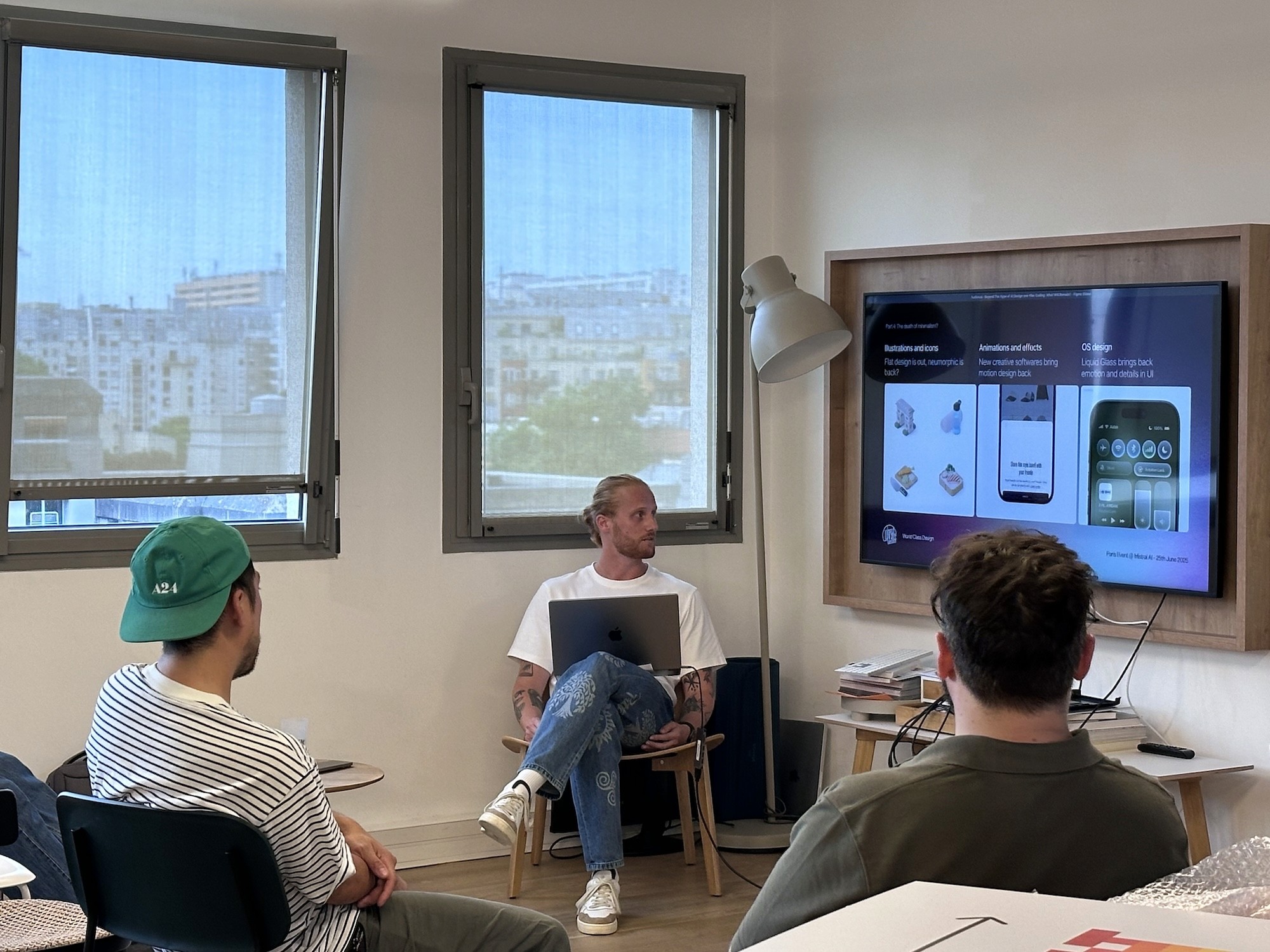
This is Guidione Machava's idea, not mine. He built World Class Design, and when he asked me to come on board to run distribution, I didn't need much convincing. Guidione and I go back years. We ran World Class Design conferences together back when I was in France, meeting founders and designers through Mistral, Epitech and Station F. We've also been building The Lawyer Guide together for more than a year now. I know how he thinks, how he executes, and how he handles pressure when things don't go as planned. That kind of trust doesn't come from a pitch deck, it comes from actually building something together first.
Where we're starting
We're not launching everywhere at once. France is first, because Guidione is based there and we can put a sales team on the ground immediately. On my side, I'm developing Singapore myself, which means meeting founders directly, pitching the product in person, and organizing conferences the same way we did in France. This isn't a platform we're going to grow purely through ads and hope. It's going to grow the same way trust always grows, one real conversation at a time, in the markets where we can actually show up.
Today I'm officially joining Guidione on World Class Design as Chief Commercial Officer, responsible for getting this product in front of the companies and designers who need it. The design hiring market has been stuck for a long time, running on outdated assumptions about what a good process looks like. Guidione built something that actually challenges that, and I'd rather put my energy into getting it in front of people than watch someone else get there first.